Road signs are the language of the road, and every driver in India is expected to know them. Regulation 40 of the Motor Vehicles (Driving) Regulations, 2017 says drivers must know road signs, markings and signals, and traffic signs are one of the topics in the online learner licence test.
The road signs and meanings chart below groups 88 common signs into mandatory, cautionary and informatory signs, with a picture, the name and what to do. Use the buttons to show one category at a time. After the chart, you will find how shapes and colours work, the signs people mix up, and simple ways to learn them.
Mandatory signs (34)
Mandatory signs are orders. Most are a red circle; a red bar across means the action is not allowed, and a blue circle tells you what you must do.
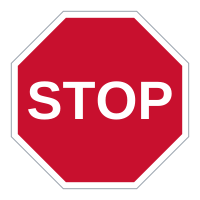 StopCome to a complete stop at the stop line, check that the way is clear, and only then proceed.
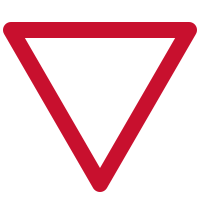 Give waySlow down and give priority to traffic on the road you are entering, stopping if necessary.
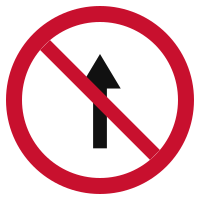 Straight prohibited / No entryDo not drive straight ahead or enter this road; vehicles are not allowed in this direction.
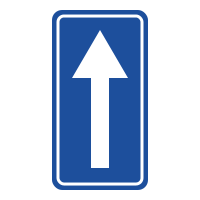 One wayTraffic on this road moves only in the direction of the arrow; do not drive against it.
 Vehicles prohibited in both directionsNo vehicle may enter this road from either direction.
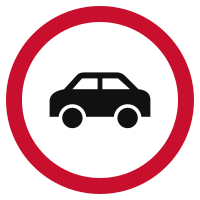 All motor vehicles prohibitedMotor vehicles of every kind must not enter this road.
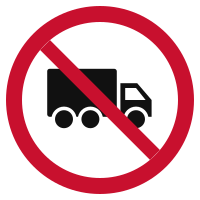 Trucks prohibitedTrucks and goods vehicles must not enter this road.
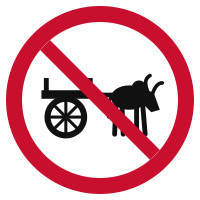 Bullock carts prohibitedBullock carts must not enter this road.
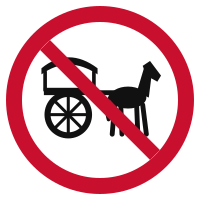 Tongas prohibitedTongas (horse drawn carriages) must not enter this road.
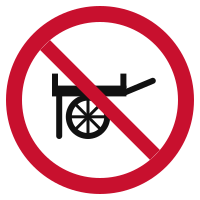 Hand carts prohibitedHand carts must not enter this road.
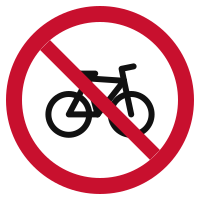 Cycles prohibitedBicycles must not be ridden on this road.
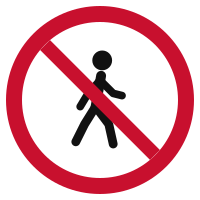 Pedestrians prohibitedPedestrians must not walk on or cross this road here.
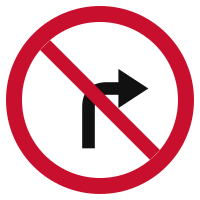 Right turn prohibitedDo not turn right at the junction ahead.
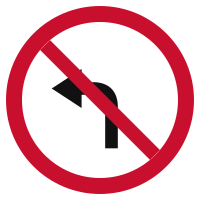 Left turn prohibitedDo not turn left at the junction ahead.
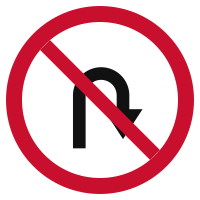 U-turn prohibitedDo not make a U-turn here.
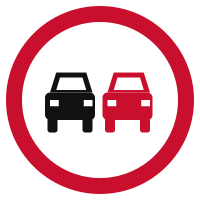 Overtaking prohibitedDo not overtake any other vehicle on this stretch of road.
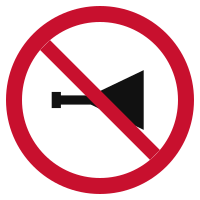 Horn prohibitedDo not sound your horn in this zone, such as near hospitals and schools.
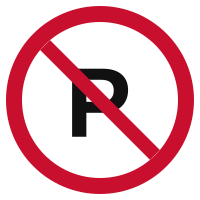 No parkingDo not park your vehicle on this side of the road; stopping briefly to pick up or drop off is allowed.
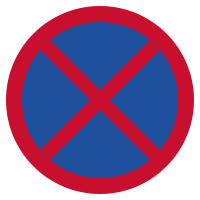 No stopping or standingDo not stop or wait here, even briefly; keep moving.
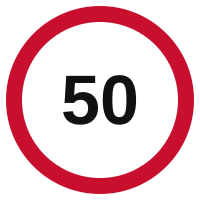 Speed limitDo not drive faster than the speed shown, in km/h (50 in this example).
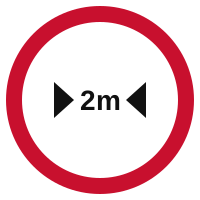 Width limitVehicles wider than the width shown (2 m here) must not enter.
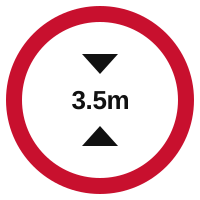 Height limitVehicles taller than the height shown (3.5 m here) must not enter.
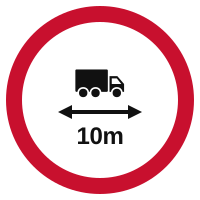 Length limitVehicles longer than the length shown (10 m here) must not enter.
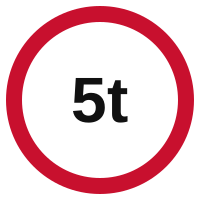 Load limitVehicles whose laden weight is more than the limit shown (5 tonnes here) must not enter.
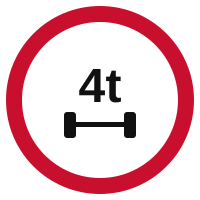 Axle load limitVehicles with an axle load above the limit shown (4 tonnes here) must not enter.
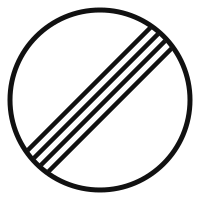 Restriction endsThe restriction shown by the earlier sign (such as a speed limit or no overtaking) no longer applies from here.
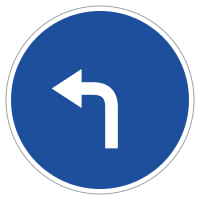 Compulsory turn leftYou must turn left at the junction ahead.
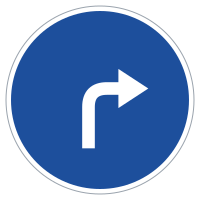 Compulsory turn rightYou must turn right at the junction ahead.
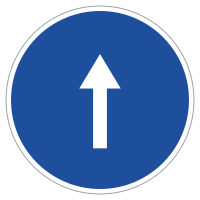 Compulsory ahead onlyYou must go straight ahead; turning is not allowed.
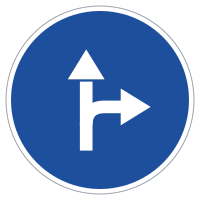 Compulsory ahead or turn rightYou must either go straight ahead or turn right.
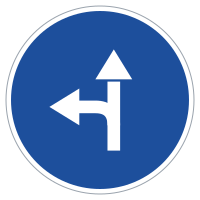 Compulsory ahead or turn leftYou must either go straight ahead or turn left.
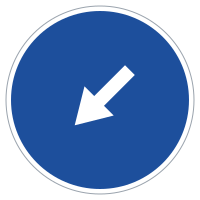 Compulsory keep leftKeep to the left of the sign or obstruction (such as a traffic island).
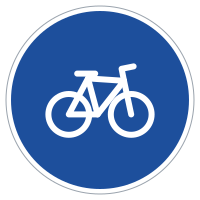 Compulsory cycle trackThis track is for cyclists only, and cyclists must use it.
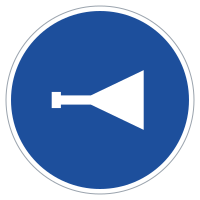 Compulsory sound hornYou must sound your horn here, usually before a blind curve or hidden junction.
Cautionary signs (34)
Cautionary signs warn you about the road ahead. They are red triangles with a black symbol, and they ask you to slow down and be ready.
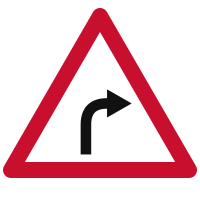 Right hand curveThe road ahead bends to the right; slow down and keep left.
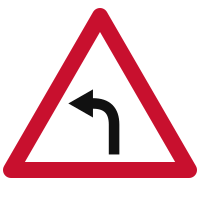 Left hand curveThe road ahead bends to the left; slow down and keep left.
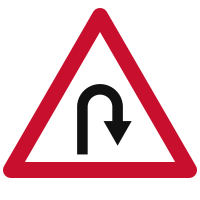 Right hairpin bendA very sharp bend that turns back to the right is ahead; slow down a lot.
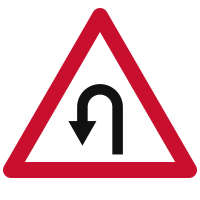 Left hairpin bendA very sharp bend that turns back to the left is ahead; slow down a lot.
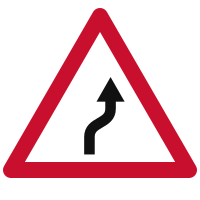 Right reverse bendThe road bends first to the right and then to the left; slow down.
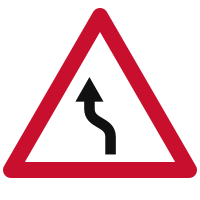 Left reverse bendThe road bends first to the left and then to the right; slow down.
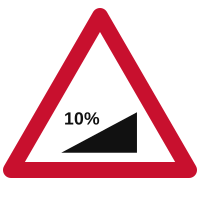 Steep ascentA steep uphill climb is ahead; select a lower gear in good time.
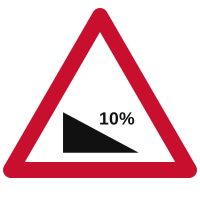 Steep descentA steep downhill slope is ahead; use a lower gear and control your speed.
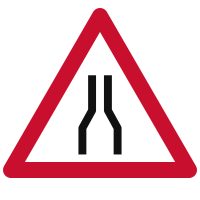 Narrow road aheadThe road becomes narrower ahead; slow down and watch for oncoming traffic.
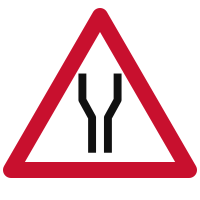 Road widens aheadThe road becomes wider ahead.
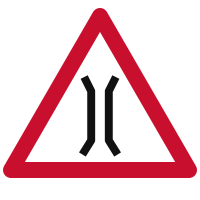 Narrow bridgeA narrow bridge is ahead; slow down and give way to vehicles already on it.
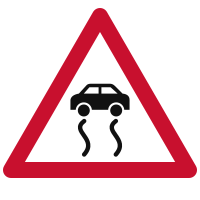 Slippery roadThe road surface ahead may be slippery; reduce speed and avoid sudden braking.
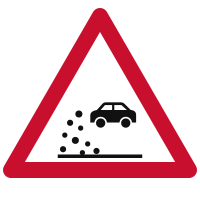 Loose gravelLoose stones or gravel are on the road ahead; slow down to avoid skidding and flying stones.
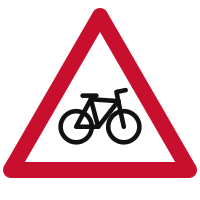 Cycle crossingCyclists may cross or join the road ahead; watch out for them.
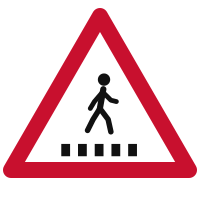 Pedestrian crossingA pedestrian crossing is ahead; slow down and be ready to stop for people crossing.
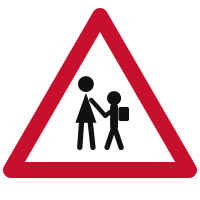 School aheadA school is nearby; slow down and watch for children crossing.
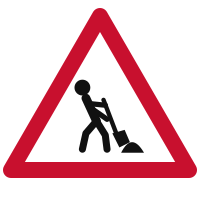 Men at workRoad works are ahead; slow down and follow any directions given.
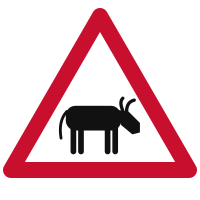 CattleAnimals may be on or crossing the road ahead; slow down.
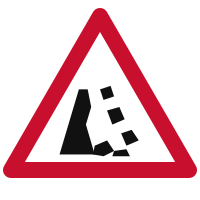 Falling rocksRocks may fall or lie on the road ahead; drive with care and do not stop.
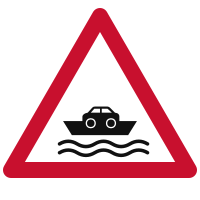 FerryThe road leads to a ferry crossing ahead; slow down and be ready to stop.
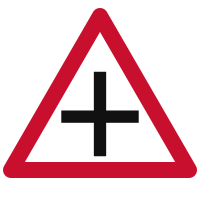 Cross roadA crossroads is ahead; slow down and watch for traffic from both sides.
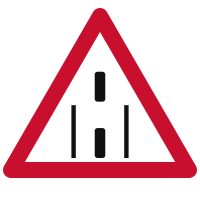 Gap in medianThere is a break in the central divider ahead where vehicles may cross or turn; take care.
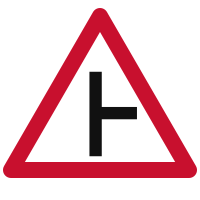 Side road rightA side road joins from the right ahead; watch for vehicles entering.
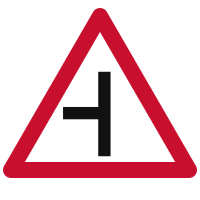 Side road leftA side road joins from the left ahead; watch for vehicles entering.
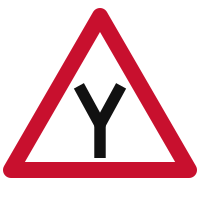 Y-intersectionThe road divides into two branches ahead; choose your lane early.
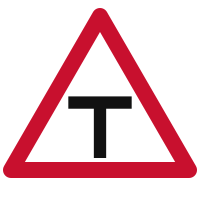 T-intersectionThe road ends at a T-junction ahead; slow down and be ready to turn left or right.
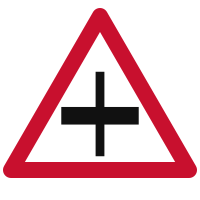 Major road aheadYou are approaching a major road; slow down and give way to its traffic.
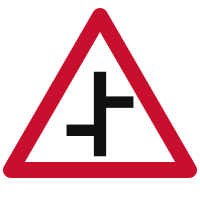 Staggered intersectionSide roads join from the left and then from the right a short distance apart; take care.
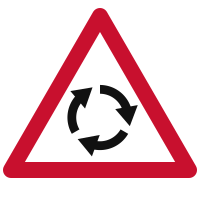 RoundaboutA roundabout is ahead; slow down, give way to traffic already on it, and go round clockwise (to the left).
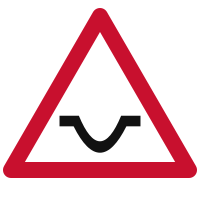 Dangerous dipThere is a sudden dip in the road ahead; slow down.
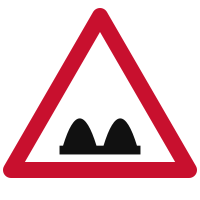 Hump or rough roadA speed breaker or uneven road surface is ahead; slow down.
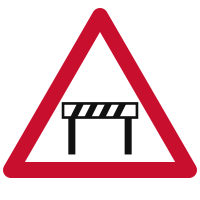 Barrier aheadA barrier across the road is ahead, such as a check post or toll; slow down and be ready to stop.
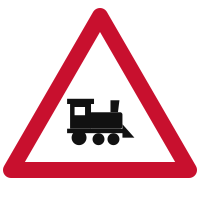 Unguarded level crossingA railway crossing without gates is ahead; slow down, stop, look both ways and cross only when no train is coming.
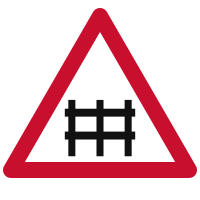 Guarded level crossingA railway crossing with gates is ahead; slow down and stop if the gates are closed or closing.
Informatory signs (20)
Informatory signs give useful information such as hospitals, fuel, parking and directions. They are usually blue rectangles.
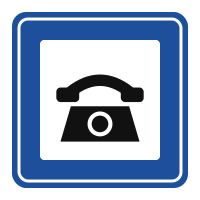 Public telephoneA public telephone is available nearby.
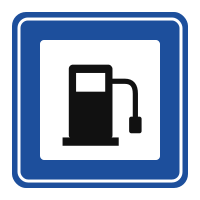 Petrol pumpA fuel filling station is ahead.
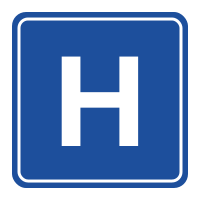 HospitalA hospital is nearby; drive quietly and give way to ambulances.
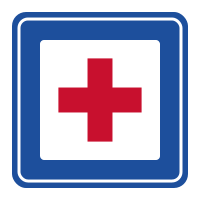 First aid postA first aid post is available nearby.
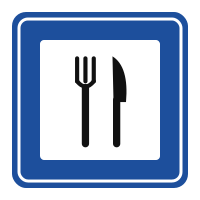 Eating placeA restaurant or eating place is nearby.
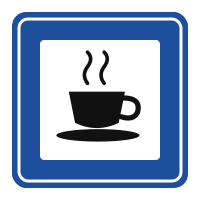 Light refreshmentTea, snacks or light refreshments are available nearby.
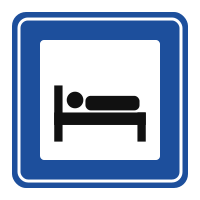 Resting placeA place to stop and rest (such as a motel or rest house) is nearby.
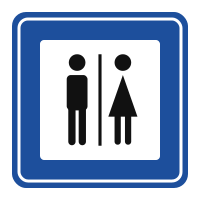 ToiletPublic toilets are available nearby.
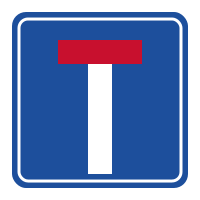 No thoroughfare (dead end)This road is a dead end with no way through; you will have to turn back.
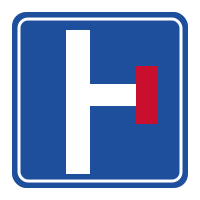 No through side roadThe side road shown is a dead end; the main road continues.
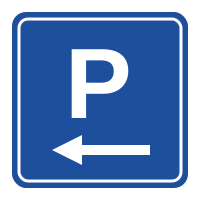 Park this sideParking is allowed on the side of the road shown by the arrow.
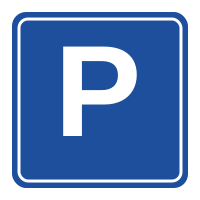 ParkingParking is allowed here.
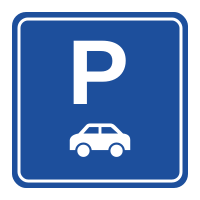 Parking lot (cars)This parking area is for cars.
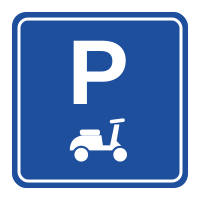 Parking lot (scooters and motorcycles)This parking area is for scooters and motorcycles.
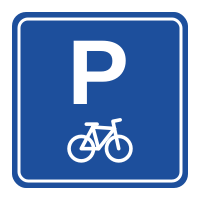 Cycle parkingThis parking area is for bicycles.
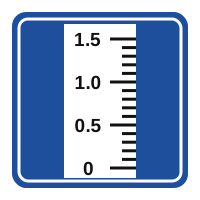 Flood gaugeShows the depth of water on the road in metres; do not cross if the water is too deep for your vehicle.
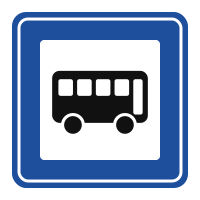 Bus stopThis is a bus stop; do not park here and watch for buses and passengers.
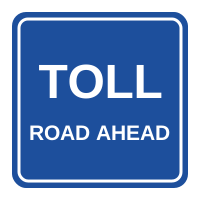 Toll road aheadA toll road or toll plaza is ahead; be ready to pay the toll (FASTag lane or cash lane).
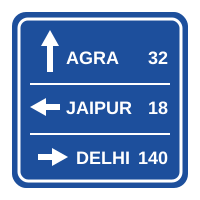 Direction sign (example)Shows the direction and distance in kilometres to the places named.
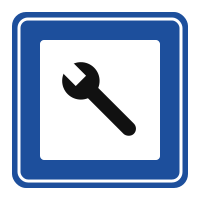 Repair facilityA vehicle repair workshop is nearby.
Types of road signs in India
Traffic police pages divide road signs into three categories:
| Type | Usual shape | What it does |
|---|---|---|
| Mandatory (regulatory) signs | Circle | Orders you must obey, such as no entry, speed limit or compulsory turn |
| Cautionary (warning) signs | Triangle | Warn you of a hazard ahead, such as a sharp bend or school |
| Informatory signs | Rectangle | Give information, such as a hospital, petrol pump, parking or directions |
STOP and GIVE WAY are the two exceptions to the shape rule. Both are mandatory, but STOP is a red octagon and GIVE WAY is an inverted triangle with the point downward.
Shape and colour meaning of road signs
- Red ring, white background, black symbol: a prohibitory sign. A red diagonal bar across the symbol means the action is not allowed, as in U-turn prohibited.
- Blue circle with a white symbol: a compulsory (positive) sign that tells you what you must do, as in compulsory turn left.
- Red bordered triangle, white background, black symbol: a cautionary sign, as in school ahead.
- Blue rectangle: parking signs, as in park this side.
- Route markers: national highways use yellow and black; state highways use green and white.
Road markings follow a similar logic: white is generally used for carriageway markings and yellow for restrictions.
Road signs people confuse most
| Sign pair | The difference |
|---|---|
| No parking and No stopping or standing | No parking stops you leaving the vehicle there. No stopping or standing is stricter: you may not stop there at all. |
| No entry and One way | No entry means you cannot drive into the road from your side. One way means traffic moves only in the arrow's direction. |
| Horn prohibited and Compulsory sound horn | Red ring means no horn. Blue circle means you must sound the horn. |
| Give way and Major road ahead | Give way is a mandatory order at the junction. Major road ahead is a warning triangle placed before it. |
| Pedestrian crossing and Pedestrians prohibited | The triangle warns of a crossing ahead. The red circle tells pedestrians not to walk or cross there. |
| Guarded and unguarded level crossing | Guarded crossings have gates; unguarded ones do not, so stop, look both ways and cross only when no train is coming. |
| Right hand curve and Right hairpin bend | A curve is a gentle bend; a hairpin turns back on itself and needs much lower speed. |
Important road signs to learn first
If you are short of time before your learning licence test, start with these 10 road signs and their meaning, because they come up again and again:
- Stop: stop at the line and go only when the way is clear.
- Give way: let traffic on the road you are entering go first.
- No entry: do not drive into this road.
- Speed limit: do not exceed the number shown, in km/h.
- Overtaking prohibited: do not overtake on this stretch.
- No parking: do not park here.
- Pedestrian crossing: slow down and be ready to stop.
- School ahead: slow down and watch for children.
- Unguarded level crossing: stop and look both ways.
- Hospital: drive quietly and give way to ambulances.
Road signs for kids and students
Children learn road safety signs best through shapes and colours. A simple way to teach basic road signs for kids:
- Red circle means No. Like no horn or no cycles.
- Triangle means Be careful. Something is ahead, like a school or a crossing.
- Rectangle means Information. Like a hospital, bus stop or parking.
Point out real signs on the way to school, and pair this with the colours of the traffic light from our traffic light rules page. For safe walking and cycling habits, see road safety rules.
How to learn road signs quickly
- Learn by category, not one by one. Once you know the shape, you already know half the meaning.
- Say the action, not just the name. For each sign, say what you would do: slow down, stop, keep left.
- Test yourself. Our LL mock test includes picture questions on these signs.
- Watch on real roads. As a passenger, name every sign you pass.
This chart uses sign names published by Delhi Traffic Police, Uttarakhand Transport and Maharashtra Police. The full legal schedule of traffic signs is set under the Motor Vehicles Act, and local signs can show different numbers, such as speed or height limits.
Frequently asked questions
How many types of road signs are there in India?
Three: mandatory or regulatory signs, cautionary or warning signs, and informatory signs.
What shape is a mandatory road sign?
Mandatory signs are generally circular. STOP (a red octagon) and GIVE WAY (an inverted triangle) are the exceptions.
What colour are cautionary road signs?
Cautionary signs are triangles with a red border, a white background and a black symbol.
What is the difference between no parking and no stopping signs?
No parking means you must not park there. No stopping or standing is stricter and means you must not stop there at all.
Are road signs asked in the learner licence test?
Yes. Traffic signs and signals are one of the topics listed for the online learner licence test under Rule 11 of the Central Motor Vehicles Rules.